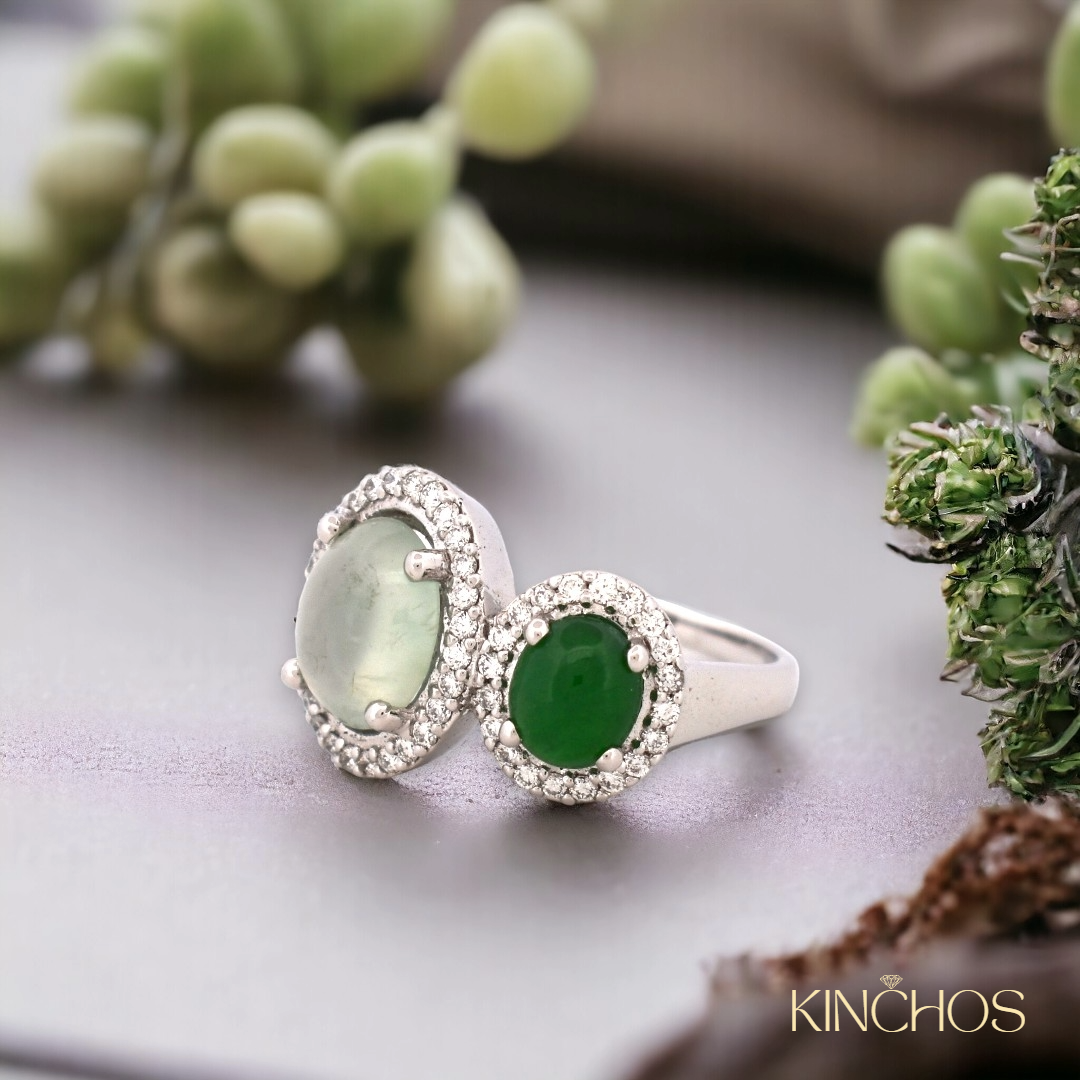
The name is French for you and me. Not you and your twin. Not two statements competing for the same hand. You. And me.
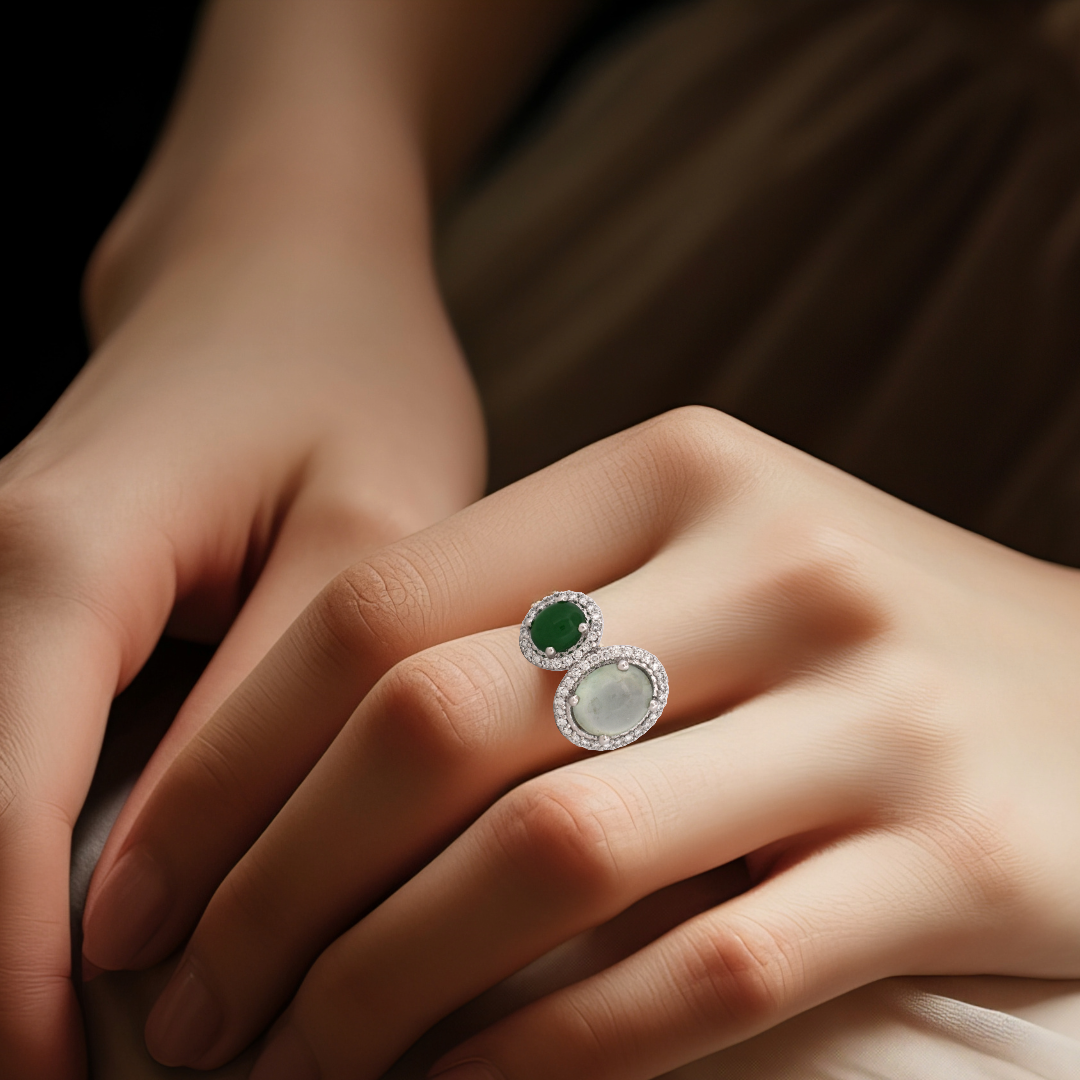
The toi et moi ring emerged in 18th century France. Not from fashion, but from philosophy. The Enlightenment was a movement built on a specific idea: that the individual is distinct, whole, and valuable. That two people could come together without either one disappearing into the other. The ring was the physical expression of that idea. One stone for each person. Two individuals, irreducible, choosing proximity.
The most famous example is Napoleon's proposal to Joséphine in 1796. A pear-shaped sapphire and a pear-shaped diamond, set side by side on a simple gold band, made by the Parisian jeweller Nitot et Fils. The stones were modest. Each weighed just under a carat. Napoleon had very little money at the time. What he had was the idea. And the idea was enough to make a ring that sold for nearly a million dollars at auction two centuries later.
The Enlightenment in miniature. Two distinct people, neither subsumed by the other, choosing to exist in the same space.
A diamond and a sapphire. Not twins, not a matched pair. Two stones in genuine conversation. One colourless light, one coloured. Different in character, related in formality. They don't fight. They complete. That is not coincidence. That is the design working exactly as it was meant to.
Somewhere along the way, the market kept the name and lost the philosophy.
What floods the feed now is two large stones of equal scale, sometimes different shapes, sometimes different colours, set side by side and labelled toi et moi. Two chunky rounds. Two oversized emerald cuts at the same carat weight. Two statements fighting for dominance on a single shank. The French name survives intact. The French idea does not.
Without a governing principle, makers reach for drama. Bigger. Bolder. More colour. More contrast. And the result is two stones that have nothing to say to each other; both are trying to lead, and two leaders on one ring is just noise.
A toi et moi is not two solitaires having an argument on one shank.
The consumer isn't at fault. The name has been in circulation long enough to mean something, but not long enough that most people know what it actually meant. They hear the words, they see the trend, they want the aesthetic. The market is happy to sell them whatever moves units and call it toi et moi. Nobody corrects this. Nobody says what the design was actually for.
A toi et moi works when the stones have a relationship; not just a proximity. When one anchors and one responds. When the proportion between them reflects something true about how two distinct things can exist together without one erasing the other.
That is the Enlightenment principle, expressed in stone. It is also, we think, simply how a beautiful ring works.
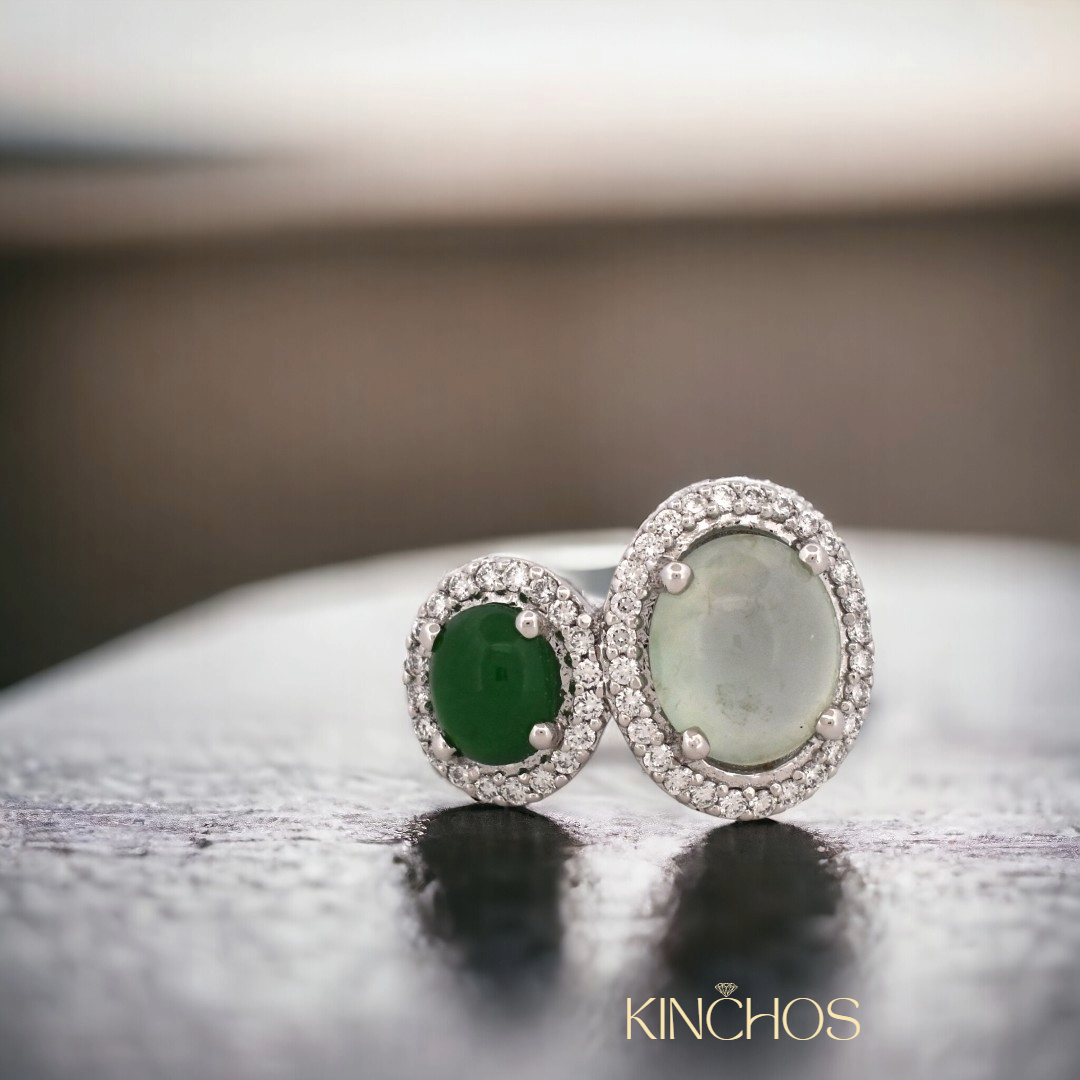
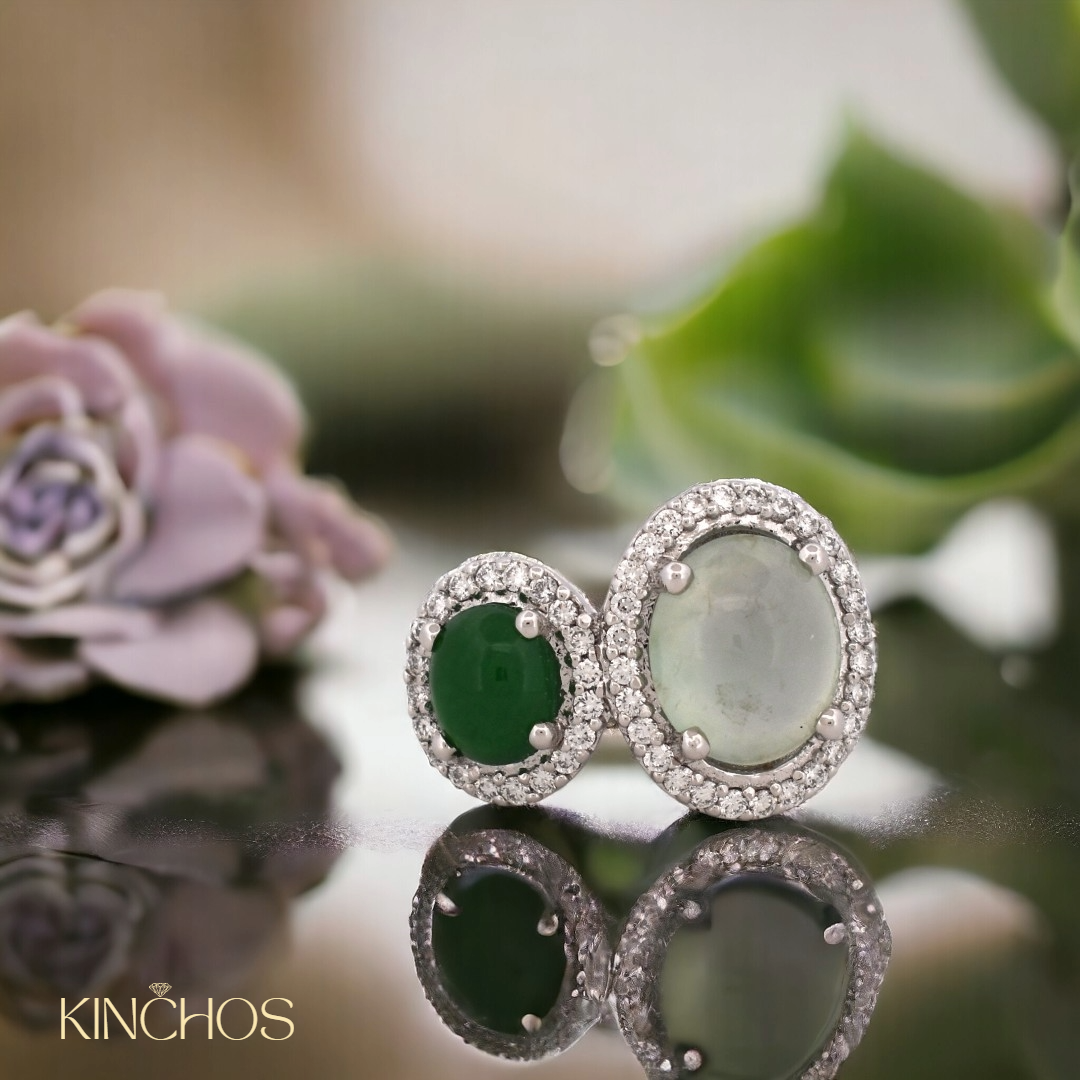
A Kinchos toi et moi commission, 2024. Deep imperial jadeite and icy pale jadeite, each with a diamond halo. Sold.
If you want one made with that logic. Stones chosen for what they say to each other, not just what they say to each other individually. We would be glad to talk.